
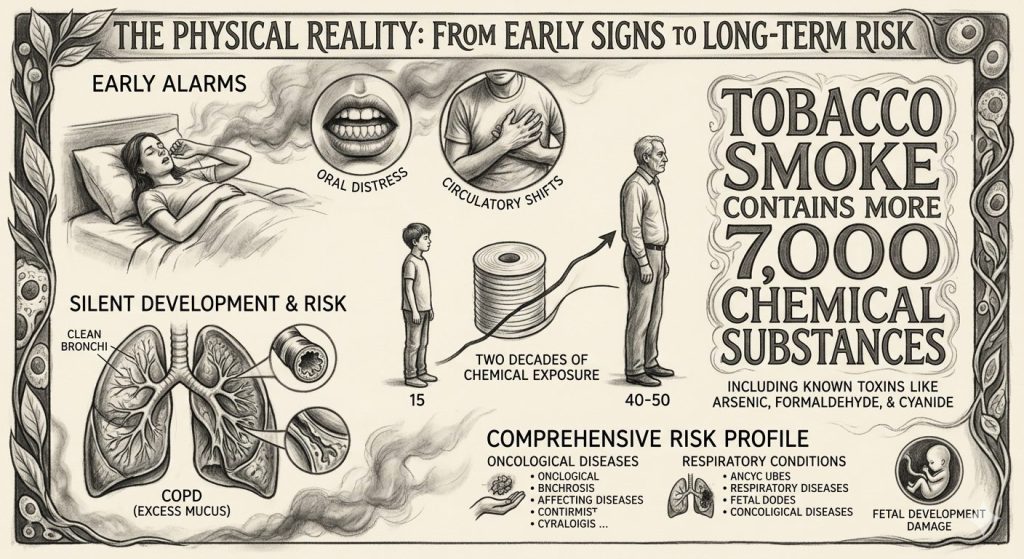
Understanding the long-term smoking health risks is vital because tobacco-related diseases do not appear overnight. They develop slowly and often begin imperceptibly. Many smokers dismiss early signals as «normal,» but these are actually the body’s first alarms.
Tobacco-related diseases do not appear overnight. They develop slowly and often begin imperceptibly. Many smokers dismiss early signals as «normal,» but these are actually the body’s first alarms.
- Warning Signs You Should Not Ignore
If you experience any of the following, your body is already struggling to compensate for the damage:
- Morning Cough: Frequently a sign of early COPD (Chronic Obstructive Pulmonary Disease), where excess mucus obstructs airflow.
- Shortness of Breath: Feeling winded after minor effort (like climbing stairs).
- Oral Distress: Bleeding gums, sensitivity to cold/heat, or bad breath (signs of gingivitis or periodontitis).
- Circulatory Shifts: Recent increases in blood pressure or a feeling of heaviness.
- The Internal Reality
Tobacco-related diseases often take decades to develop. Many smokers begin during adolescence, but it is typically after the age of 40—and especially after 50—that these conditions begin to manifest clinically.
|
➤ What This Means for You |
| If you started smoking at age 15 and are now 40, your body has sustained over two decades of continuous chemical exposure. Tobacco-related disease is often «silent» for years—until it reaches a tipping point. The absence of symptoms today does not mean the absence of underlying damage.
|
Tobacco smoke contains more than 7,000 different chemical substances, at least 250 of which are known toxins. Since 1964, more than 69 million premature deaths have been associated with tobacco use. Smoking damages nearly every organ in the body, harms fetal development, and significantly diminishes quality of life.
- Comprehensive Disease Risk Profile
According to documented clinical evidence, smoking is a primary cause or significant risk factor for the following:
- Oncological Diseases (Cancer)
Smoking is linked to cancer in almost every part of the body, including:
- Oropharynx (Throat)
- Larynx (Voice box)
- Esophagus
- Trachea, Bronchitis, and Lung
- Acute Myeloid Leukemia
- Stomach
- Liver
- Pancreas
- Kidney and Ureter
- Urinary Bladder
- Cervix (Uterine Cervix)
- Colon and Rectum
- Chronic Diseases and Systemic Alterations
- Ophthalmological: Cataracts and Age-Related Macular Degeneration (AMD).
- Oral: Periodontitis (Gum disease).
- Cardiovascular: Aortic Aneurysm, Atherosclerosis, Coronary Heart Disease, and Stroke.
- Respiratory: Chronic Obstructive Pulmonary Disease (COPD), Emphysema, Chronic Bronchitis, and Pneumonia.
- Metabolic: Type 2 Diabetes.
- Reproductive (Women): Reduced fertility and Ectopic Pregnancy.
- Reproductive (Men): Erectile Dysfunction.
- Systemic: Inflammation, Immune System dysfunction, and Rheumatoid Arthritis.
- Developmental: Adverse effects on fetal growth and overall health during pregnancy.
The earlier you quit, the more lung function you preserve. Damage progression slows significantly after cessation. You can continue accumulating silent damage, or you can interrupt the process today. Every cigarette avoided is a step toward biological recovery.
|
⚠️ Medical Disclaimer: This section is for educational purposes only. The symptoms and diseases listed represent documented clinical risks and should NOT be used for self-diagnosis. If you are experiencing any of these symptoms, or if you have a history of respiratory or cardiovascular issues, consult your healthcare provider immediately.
|